Pedal & brake assist
The pedal lets you request braking force. A vacuum, hydraulic, or electric assist system reduces the effort needed. An unusually hard pedal can involve assist faults and needs diagnosis.
Understand what your brakes need—and why. Excel Auto Repair inspects and repairs braking concerns for European, Asian, and domestic cars, SUVs, and pickup trucks.
Serving East Falmouth, Mashpee, Bourne, Sandwich, and the Upper Cape.
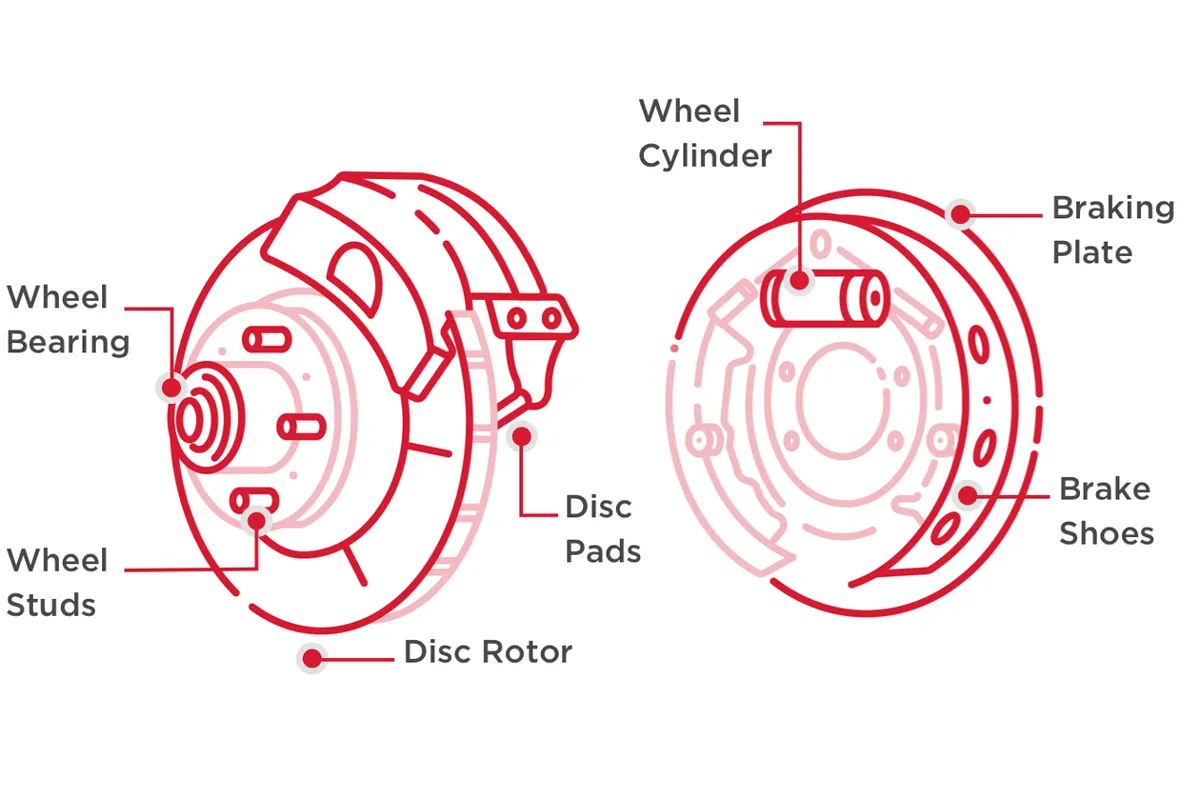
Most cars and light trucks use hydraulic friction brakes. Pressing the pedal creates pressure that applies the wheel brakes. The parts must work together: good pads alone cannot compensate for a leaking hose, a sticking caliper, or insufficient tire grip.
Pedal force is assisted, and the master cylinder creates hydraulic pressure on conventional systems.
Fluid carries the pressure through lines and hoses to calipers or wheel cylinders.
Pads squeeze a disc or shoes press against a drum, converting vehicle motion into heat.
Tire grip on the road determines how effectively braking force slows the vehicle. Worn tires and slippery surfaces can limit stopping ability.
Regenerative braking uses the drive motor to slow the vehicle and recover energy. Friction brakes still provide braking when required. Brake blending, electric assist, and brake-by-wire designs differ by model, so diagnosis and service procedures must match the vehicle.
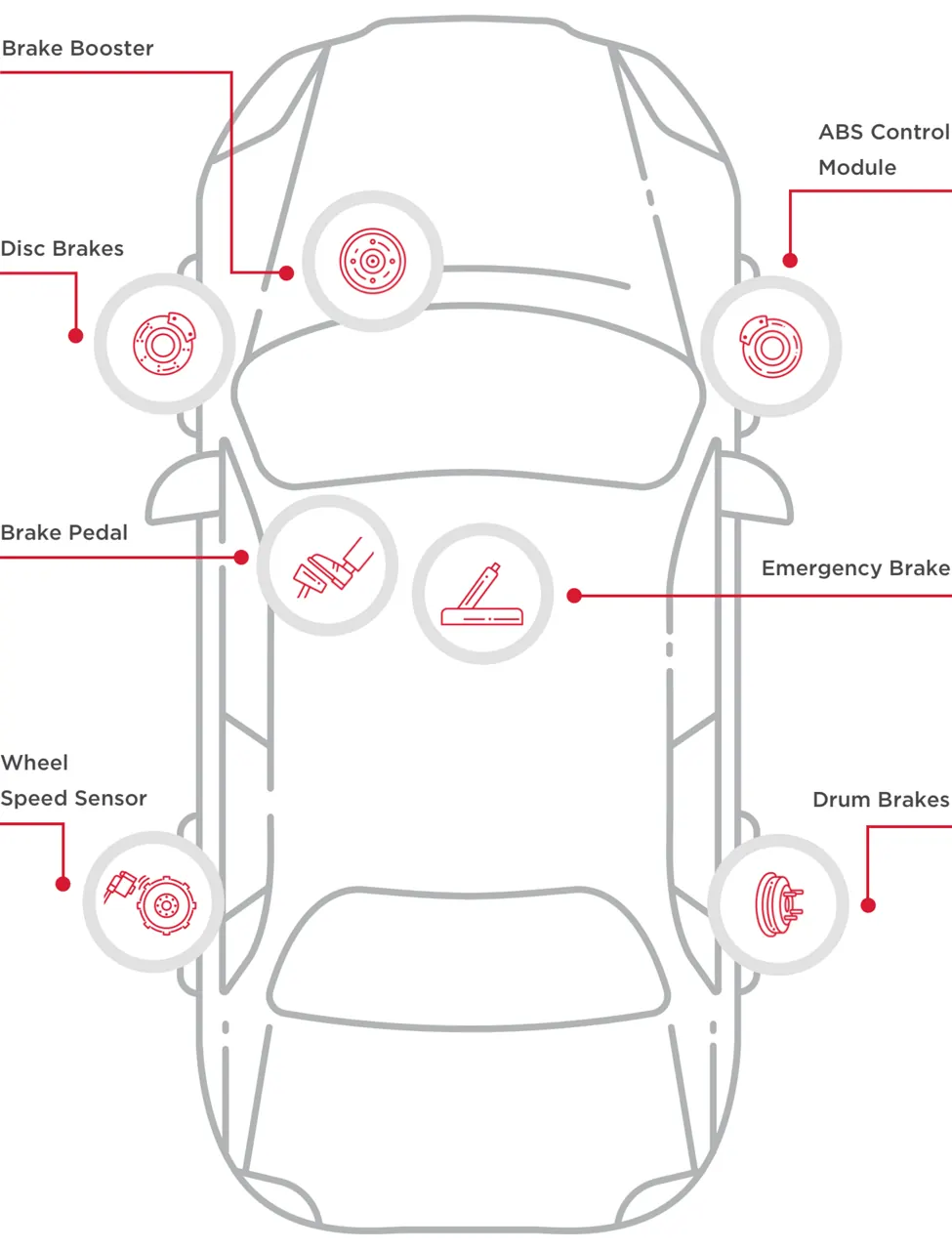
Vehicle designs vary. Here are the main parts we consider when assessing braking performance and wear.
The pedal lets you request braking force. A vacuum, hydraulic, or electric assist system reduces the effort needed. An unusually hard pedal can involve assist faults and needs diagnosis.
On a conventional hydraulic system, pistons in the master cylinder create brake-fluid pressure. The reservoir supplies fluid as needed. A low level requires checking for wear or a leak rather than simply topping it off.
Metal lines carry hydraulic pressure along the vehicle, while flexible hoses allow movement at the wheels. Corrosion, damaged hoses, and leaking connections can compromise braking.
Fluid transmits pressure through the system. Many common brake fluids absorb moisture over time, affecting performance and corrosion protection. Fluid type and service intervals must match the vehicle manufacturer’s requirements.
Friction material on the pads presses against the rotor. Pads wear with use, and wear can differ between inner and outer pads. Inspection considers remaining material, wear pattern, contamination, and related hardware.
Rotors turn with the wheels and provide the friction surface for the pads. We assess condition and thickness against specifications. Vibration can require checking runout and thickness variation as well as related wheel components.
Hydraulic pressure moves caliper pistons to apply the pads. Floating calipers also rely on free-moving slides. Sticking pistons or slides can cause dragging, uneven wear, heat, or pulling.
Some vehicles have rear drum brakes. Wheel cylinders push brake shoes outward against the drum. Springs, adjusters, friction surfaces, and cylinder seals all contribute to correct operation.
Wheel-speed sensors help the anti-lock brake system detect a wheel approaching lockup. The control unit and hydraulic valves modulate pressure to help maintain steering control during hard braking.
On many vehicles, traction and stability systems share wheel-speed data and brake hardware. They can apply individual brakes and coordinate with engine controls to help manage wheelspin or vehicle direction.
The parking brake holds a parked vehicle using cables, an electric actuator, or a separate mechanism. Electronic designs may require a service mode and vehicle-specific procedures during rear brake work.
Clips, shims, springs, boots, and wear sensors support quiet, consistent operation. Some wear indicators make a sound; others trigger a dashboard message. Their design and replacement needs vary by vehicle.
These reference examples help explain common findings. They are educational images, not parts photographed at Excel Auto. The right repair depends on inspecting and measuring your vehicle’s components.
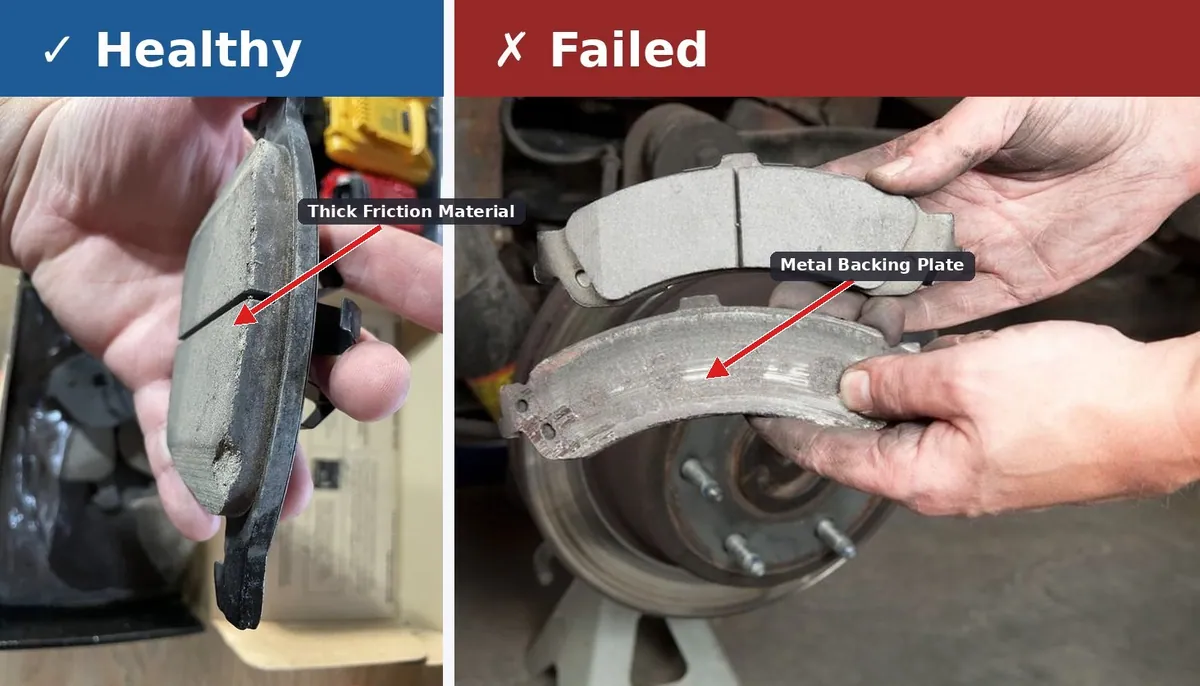
A worn-out pad can expose its metal backing plate. Continued contact can score the rotor and create grinding noise. We check inner and outer pad thickness, wear patterns, and related hardware.
Image: Go-Parts brake pad comparison.
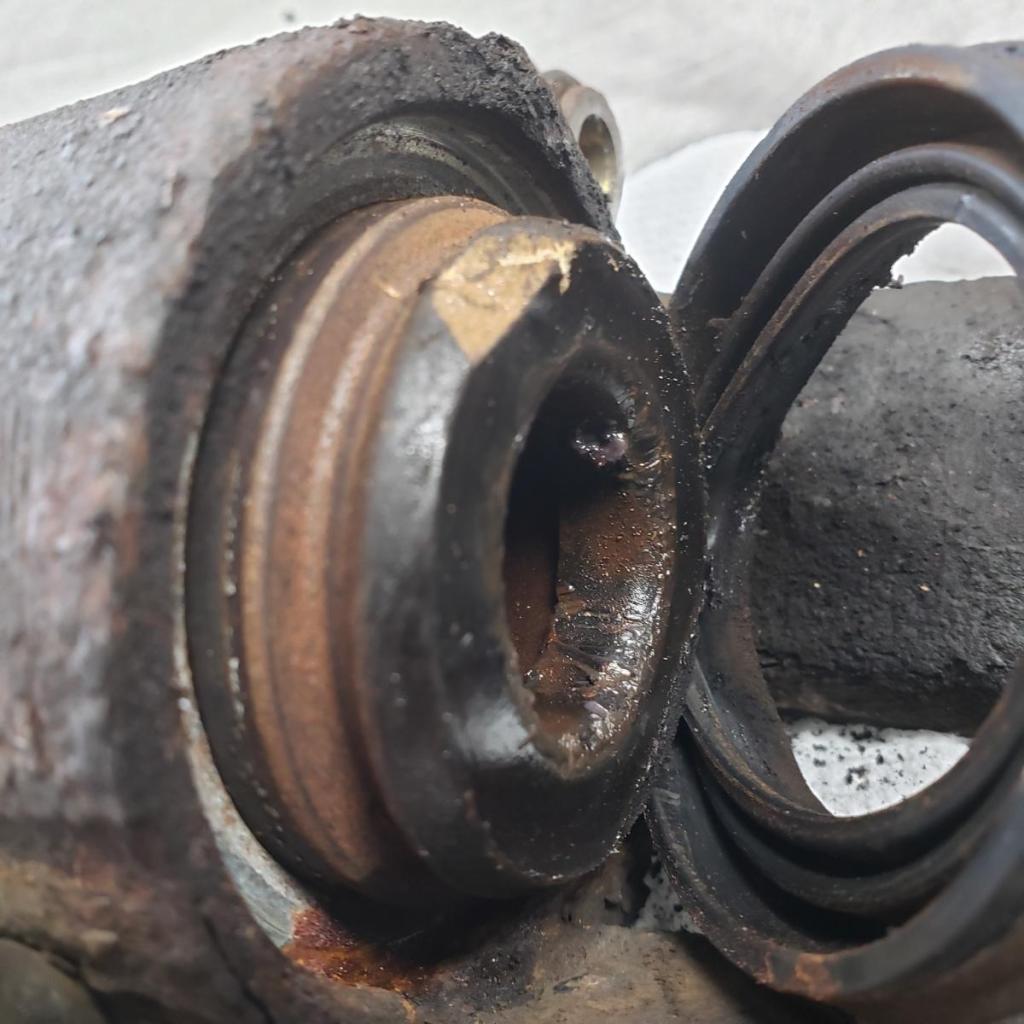
A damaged protective boot can allow moisture and debris around the piston. Corrosion or a sticking piston can prevent normal release, causing brake drag, excess heat, and uneven pad wear. Caliper movement and hydraulic operation need checking.
Image: Grease In Her Veins.
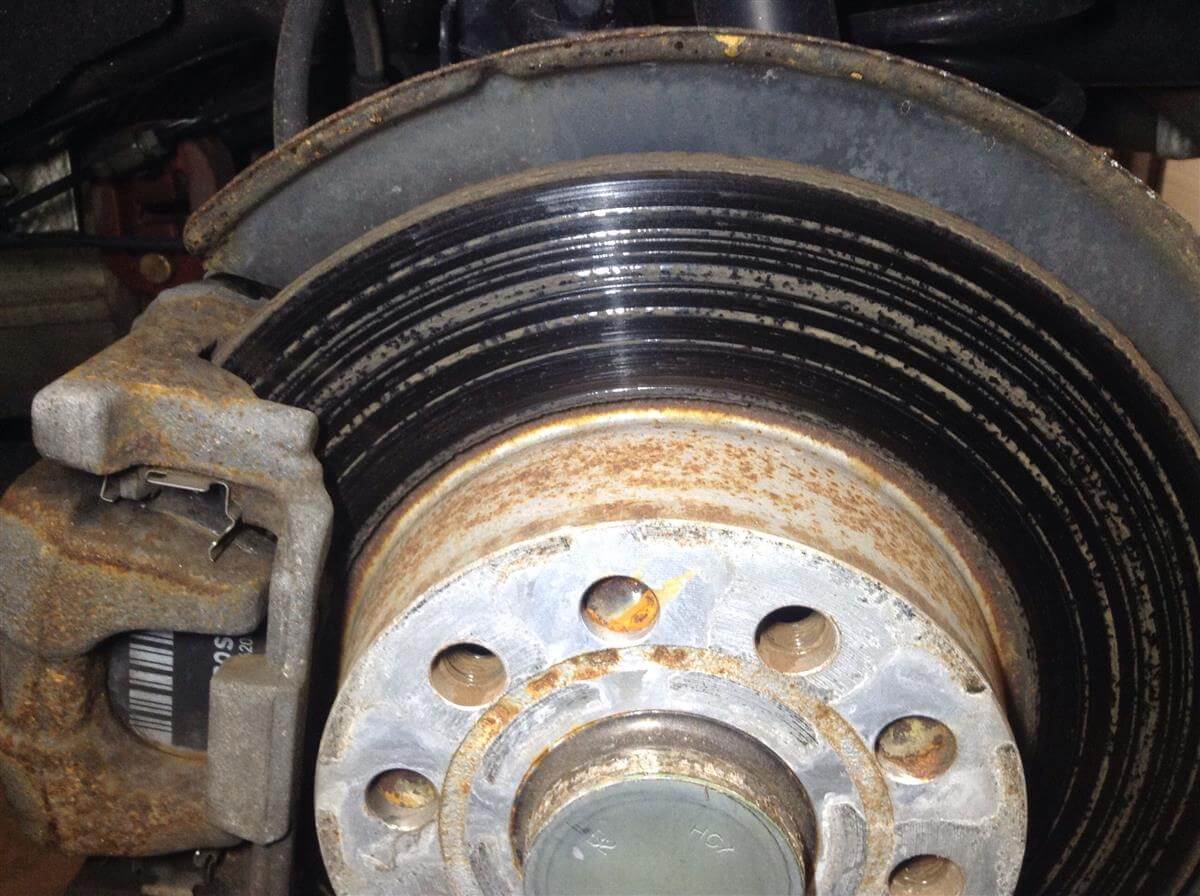
This example shows visible rotor surface damage. Deep scoring, corrosion, cracks, or insufficient thickness can affect serviceability. We assess both friction surfaces and measure the rotor against the vehicle’s specifications.
What about a “warped” rotor? Brake pulsation may involve lateral runout or disc thickness variation. These are checked with measuring equipment; a photograph alone cannot confirm them. Hub condition and other components also matter.
Image: V&F Auto rotor wear example.
Click an image to view it larger. Similar symptoms can have different causes; images alone do not diagnose a vehicle.
Wear indicators, worn friction material, corrosion, or hardware can cause noise. Grinding needs prompt attention.
Rotor variation, runout, wheel or tire issues, and other components can contribute. A vibration alone does not identify the part.
Air, leaks, hydraulic faults, or assist problems can change pedal feel. A significant change requires immediate assessment.
A sticking caliper, hose fault, contaminated friction material, or another issue can affect braking balance.
Brake, ABS, stability-control, or pad-wear warnings have different meanings. Tell us exactly which message or light appears.
Do not assume a low reservoir only needs fluid. The cause must be identified and the correct repair completed.
We use brake parts from Akebono, Textar, Brembo, and Zimmermann. Our team selects components for your vehicle’s application and the repair needed, with fitment and availability confirmed before installation.




Ask which brand and part option is appropriate for your specific car, SUV, or pickup truck when arranging brake service.
We assess the concern, check relevant components, and explain recommended work and timing. Depending on the findings, service may include:
We discuss the estimate before you approve repairs. Tell us about recent brake work, any warning lights, and when the symptom occurs.
Arrange brake service ↗
There is no single mileage that suits every driver. Driving conditions, vehicle weight, pad material, and use affect wear. Inspection and measured remaining material provide a better basis for planning service.
Not automatically. Rotor thickness, surface condition, corrosion, runout, and manufacturer requirements determine the appropriate recommendation. We discuss the findings before you approve the work.
No. Noise can come from wear indicators, vibration, surface condition, contamination, or hardware. Inspection is the right starting point.
No. Pad replacement addresses friction wear. Fluid service addresses the hydraulic fluid, using the correct specification and bleeding procedure for the vehicle.
It indicates a fault detected by the anti-lock system. Normal hydraulic braking may remain, but ABS or related assistance may be unavailable. The fault needs diagnosis; combined warning lights or changed braking require particular caution.
Yes. Contact Excel Auto with your year, make, model, symptoms, and mileage. Mention hybrid or electric powertrains and electronic parking brakes so we can confirm the work and plan your visit.
Learn more: Wagner brake-system guide · Bosch braking technology